Archival Field Notes on Oddities 2026 Continental Index

Europe Gets Stranger When You Look Closer

Pick a Curious Place

Landscapes With Unlikely Shapes

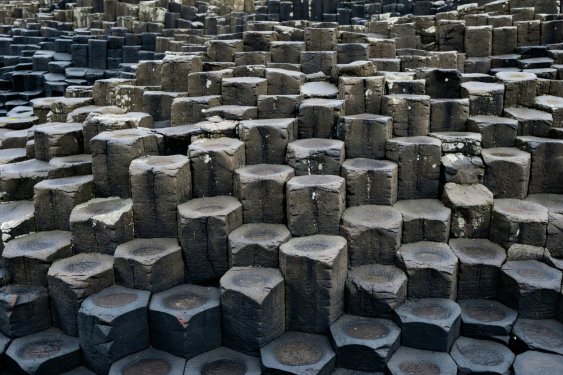
Detail shot of hexagonal basalt jointing at Giant's Causeway Northern Ireland

Giant's Causeway

Over 40,000 interlocking basalt prisms formed 60 million years ago when Paleocene lava pooled and contracted along vertical fractures with mathematical regularity.

  • Formation: Subterranean columnar cooling
  • Texture: Fine-grained basaltic tessellation
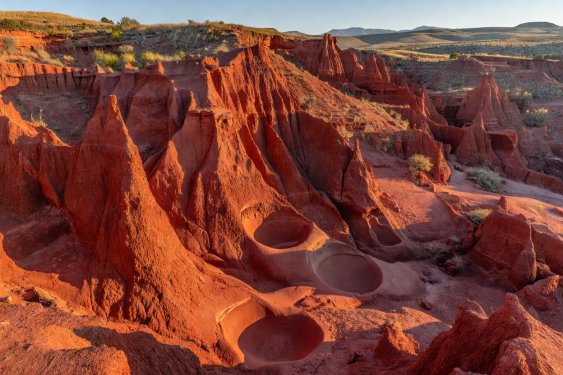
Eroded red clay cliffs of Las Médulas Roman hydraulic mines Spain

Las Médulas

Towering orange-red clay pinnacles created through ruina montium, a Roman mining technique where mountain channels were breached by torrential water bursts.

  • Origin: 1st century Roman hydraulic quarrying
  • Landscape: Castilian chestnut scrub and pinnacles

Streets That Fell Quiet

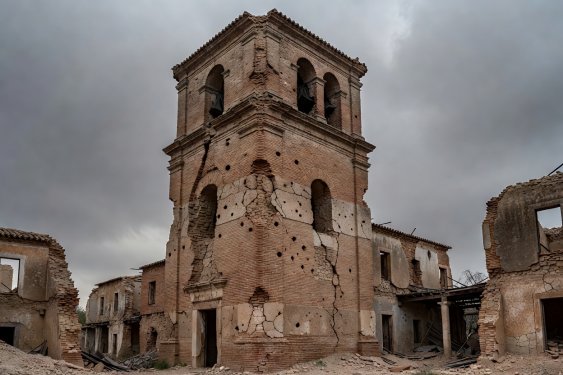
Weathered brick church tower scarred by artillery in old Belchite Aragon, Spain

Belchite Pueblo Viejo

Left untouched after the 1937 Battle of Belchite, where artillery shattered baroque mudéjar belfries and collapsed vaulted naves into open sky.

  • Evacuation: 1937 frontline combat zone
  • Status: Memorial open-air ruin park
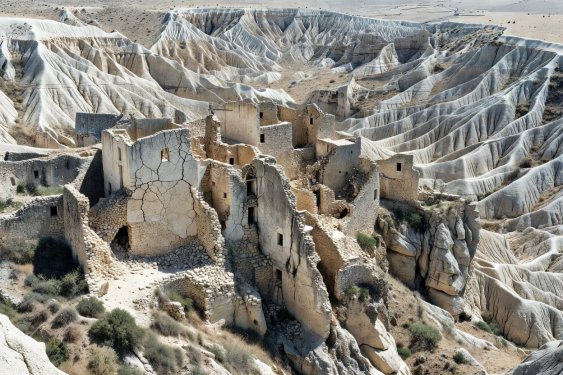
Crumbling limestone facades on the desert cliff edges of Craco Basilicata, Italy

Craco

A medieval cliff settlement abandoned after catastrophic landslides in 1963. Its limestone palaces sit precariously above barren Badlands fissures.

  • Depopulation: Ground instability and fault slippage
  • Feature: Norman watchtower atop calcarenite

Hidden in Plain Sight

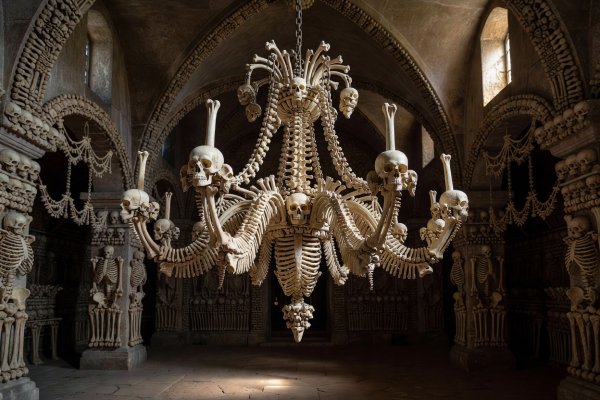
Close-up of chandelier bone arrangements in Sedlec Ossuary Kutná Hora, Czechia

Sedlec Ossuary

Underneath the Cemetery Church of All Saints lies a chapel decorated with the skeletal remains of over 40,000 individuals, organized in 1870 by woodcarver František Rint into armorial shields, pyramids, and a central bone chandelier containing every bone in the human body.

Unlike medieval memento mori designed to terrify, Sedlec presents a disciplined, sculptural arrangement that reflects both liturgical reverence and nineteenth-century artisan craft.

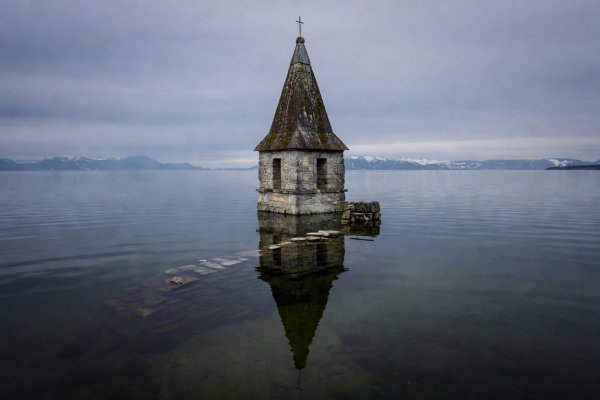
14th-century Romanesque bell tower rising out of Lake Reschen South Tyrol, Italy

Reschensee Campanile

When an artificial reservoir was flooded in 1950 to generate hydroelectric energy, 163 houses and the parish of Alt-Graun vanished beneath the water. Only the 14th-century Romanesque bell tower remains standing above the alpine surface.

In winter, ice freezes solid around the masonry, permitting on-foot inspection of medieval cut stone surrounded by Alpine summits.

Built to Make You Look Twice

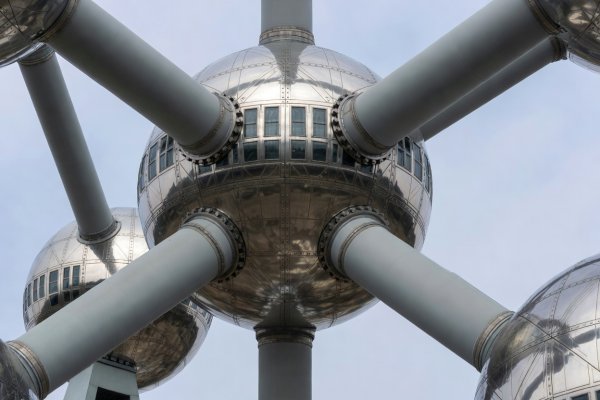
Stainless steel skin and connecting tubes of Brussels Atomium Brussels, Belgium

The Atomium

Constructed for the 1958 World's Fair by engineer André Waterkeyn, this 102-metre structure magnifies a single iron crystal unit cell 165 billion times using nine steel spheres joined by escalators.

  • Engineering: 2,400 tonnes of steel and aluminium
  • Concept: Post-war nuclear optimism in physical form
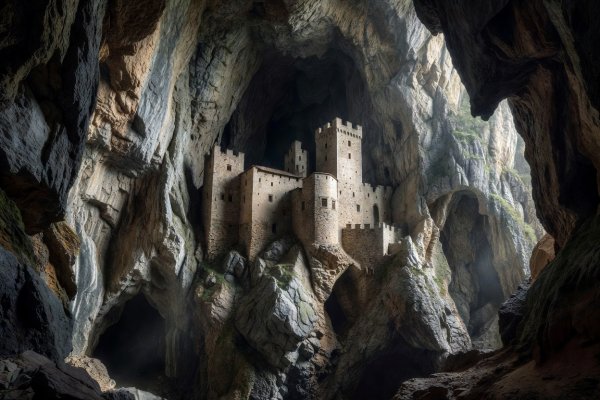
Renaissance castle facade wedged directly inside a vertical limestone cavern Postojna, Slovenia

Predjama Castle

A fortified Renaissance stronghold built into the maw of a 123-metre limestone cliff, integrating damp natural karstic caverns directly into its domestic living quarters and defensive siege tunnels.

  • Geography: Karst cave mouth with hidden spring
  • Historical Peak: Rebel knight Erasmus of Lueg, 15th c.

Choose the Kind of Strange

Unusual sites in Europe fall into distinct developmental pathways. Compare how geological crystallization, sudden human evacuation, sacred bone sculpture, and avant-garde structural engineering differ across accessibility and character.

Site Name Category Origin Epoch Physical Defining Feature Access Consideration
Giant's Causeway Natural Wonder Paleocene (60 Ma) Columnar jointing across basalt coastal stepping stones Exposed coastal trail, steep basalt stairwells
Belchite Viejo Abandoned Town 1937 CE (Battle) Artillery-damaged mudéjar masonry and open church nave Guided daytime or evening access only for structural safety
Sedlec Ossuary Hidden Stop 1870 CE (Assembly) Curated human bone chandeliers and Schwarzenberg coat of arms Subterranean chapel, strict photography restrictions
The Atomium Odd Architecture 1958 CE (Expo) 165-billion-times magnified iron unit crystal cell Internal escalators, viewing tube corridors
Predjama Castle Odd Architecture 1274 / 1570 CE Vertical integration of karst caverns into stone ramparts Slippery cavern rock, cold humidity in upper chambers

Curiosity Has Boundaries

Unusual places in Europe are neither theme parks nor playgrounds. They are sensitive geological formations, protected archaeological zones, solemn war memorials, or private community heritage sites. The desire to witness peculiar landmarks requires strict adherence to physical conservation and respectful observation.

The Detour Standard Never remove stone fragments from basalt fields, avoid traversing unstable ruined walls in abandoned pueblos, and observe silence within ossuaries and memorial chapels.

Read our full practical recommendations before setting out on European detours, or consult our index documentation on conservation laws and safety gear.

Read Our Field Guide FAQ