Unconventional by Design
When architectural convention gives way to extreme topography or daring technological concepts, buildings become physical oddities that test structural engineering.
 Brussels, Belgium
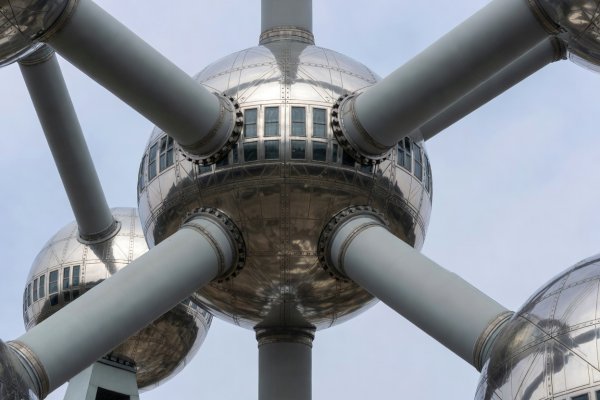
The Atomium
Conceived for Expo 58 by engineer André Waterkeyn alongside architects André and Jean Polak, the Atomium stands 102 metres tall on the Heysel plateau. The structure represents a single unit cell of an iron body-centred cubic crystal, magnified 165 billion times.
Nine spherical pods, each 18 metres in diameter, are interconnected by steel tubes containing stairs, escalators, and a central high-speed lift that ascends to the pinnacle in 25 seconds. Originally intended to stand for just six months, its sheer structural boldness made it a permanent fixture of Brussels' post-war landscape. In 2006, faded aluminium sheets were replaced with durable marine-grade stainless steel.
- Total Weight: 2,500 tonnes
- Height: 102 metres (335 ft)
- Core Architect: André Waterkeyn
 Carniola, Slovenia
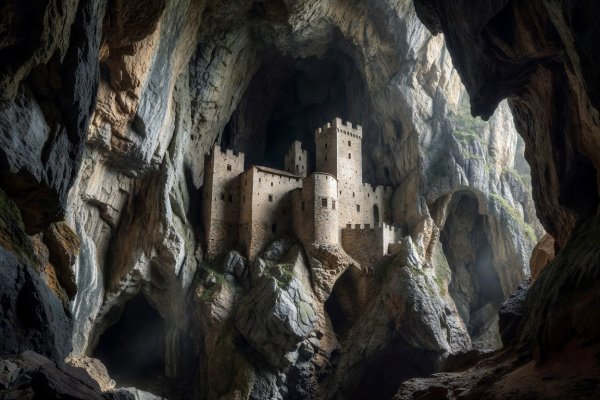
Predjama Castle
Sitting in the historical region of Inner Carniola, Predjama is the world's largest cave castle. Built directly into the arched mouth of a 123-metre-tall karst cliff, the rear walls of the living quarters are the raw, dripping limestone of the mountain itself.
The fortress dates to at least 1274, but achieved legendary status in the 15th century under the rebel knight Erasmus of Lueg. During a protracted Habsburg siege, Erasmus endured months in comfort thanks to a secret cave passage that exited through the cliff top into the nearby Vipava valley, through which fresh cherries and provisions were delivered undetected.
Inside, wooden floors join directly to wet bedrock, while ingenious gutters carved into cavern stalactites collected drinking water for the garrison.
- Cliff Height: 123 metres
- Cave Network Length: 14 kilometres (second longest in Slovenia)
- Guinness World Record: World's Largest Cave Castle
 Stara Planina, Bulgaria
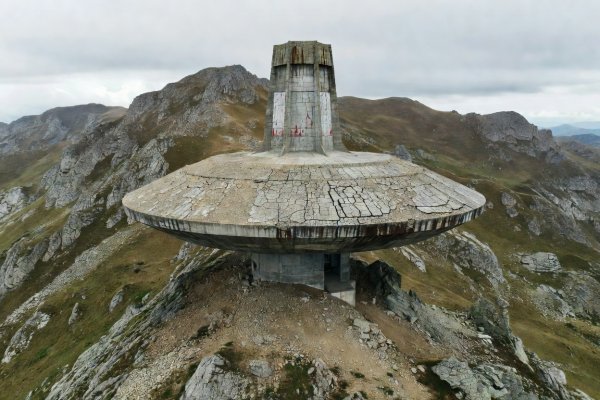
Buzludzha Monument
At an elevation of 1,441 metres atop the Hadzhi Dimitar peak in the central Balkan Mountains sits a massive concrete saucer and a 70-metre vertical tower crowned with red glass stars. Designed by architect Georgi Stoilov and completed in 1981, Buzludzha served as the ceremonial headquarters of the Bulgarian Communist Party.
Constructed through military volunteer corps over seven years, the interior dome featured 510 square metres of intricate hand-laid mosaic portraits and cosmic emblems. Abandoned following the collapse of the socialist state in 1989, the monument was left exposed to mountain snowstorms, which stripped its copper roofing and exposed the bare concrete armature to the elements.
- Peak Elevation: 1,441 metres above sea level
- Construction Period: 1974–1981 CE
- Architect: Georgi Stoilov